Exclusive Interview With The Fismits (South Africa)
- Megan Routledge

- May 6
- 10 min read

The Fismits - Mark Biagio - Photo Credit: Melissa Kruger.
From Durban’s Underground to 'Falling Joy': Mark Biagio, The Fismits and a Life in South African Rock
Mark Biagio’s story does not begin with The Fismits, but the project has become the clearest expression of everything he has carried through South African rock history, from the early 1990s Durban scene and his work in The Mind Theatre with Bruce Barrett, to the later tribute work around Live Jimi Presley and the more recent shift into a focused, singular creative voice. Formed in 2016, The Fismits have grown from a three-piece into Biagio’s independent indie-alternative outlet, and the 2026 release pattern around 'Scars', 'Independence', 'When' and 'Falling Joy' gives this chapter a rare sense of continuity, as if songs first written decades ago are finally finding the time and shape they always needed. The invitation here, is not just to hear a new music, but to understand how memory, authorship, production and South African underground rock history can meet in the present tense.
Q: For readers meeting you for the first time, who is Mark Biagio, and how would you describe The Fismits in a way that goes beyond genre labels and gets to the heart of what the project is about?
A: I am a husband, father, sailor and muso. Fismits is simply my creative outlet for the muso part. Fismits does not have a world changing business plan or any agenda apart from have fun and be true to what you are trying to create
Q: Your story reaches back to the early 1990s in Durban and The Mind Theatre with Bruce Barrett. What did that period teach you about songwriting, performance, and the culture of South African rock at the time?
A: I don't think there was anything conscious about “the” learning or teaching. At 20 you're a sponge absorbing the unknown, with a fearless confidence and your only talent is to work hard. I did learn that this is what I wanted to do and that I had endless energy when doing it. The “how” proved rather difficult.
Q: The name The Fismits comes from the word “misfits”. What does that word still mean to you now, and how does it reflect the way you have chosen to work as an independent artist?
A: It's still very apt. Getting the parties to fit and stay “fitted” is the challenge. Initially the name was because of the leftovers (aka misfits) of my previous bands getting together and uniting as The Fismits despite it being an out of balance band. Pandemics and life then splintered the original pieces. So, I have not willingly chosen to work as an independent artist, it's more a case of that's where I am.
Q: You have released music through The Fismits for years, but the 2026 material feels like a particularly unique chapter. What connected the decision to revisit these older songs to the moment you are in now as a writer, performer, and producer?
A: Well, it would be different, different songs, written by a different person and from a different time. The connection came from when I finally finished ‘Scars’ and liked it. The issue was now how do I package this, a single, an EP or add it to the next album? An EP made sense.
Q: 'Scars' has lived many lives before arriving in its final form. What was missing in the earlier versions, and what finally made this recording feel definitive?
A: There was nothing missing from the original. Perhaps I was too close to the original to make an unbiased decision. However, when I recorded it, as The Fismits, like the original, it did not sound right. When I gave myself creative license to divert from the original perfection, I found my own version that made sense. Technically it's boring to get into, but I’ll just say I “fismitised” the track.
Q: On 'Independence', you moved into electronic textures, looping rhythms, and a more adventurous atmosphere. What were you hearing in your head that made you want to step away from a traditional pure rock approach?
A: This song, originally, was very influenced by late 80’s / early 90’s British indie. I started there and found myself wandering into some new wave tunnels. I just kept going, luckily there was no formal original version to compare to, so I did not have to break the chains, like I did in ‘Scars’.
Q: 'When' comes from the same long creative history, but it carries a different emotional weight. What does that song say about the younger version of yourself, and what does it say about the person singing it now?
A: It's like the image you have of yourself in your head and then when you look in the mirror, for a split second see another person. Inside, you are the same. ‘When’ was an anthem for me at 26. However, at my age, parts of it did not translate to where I am now and the world, I find myself in. The same passion and emotion are there, but the topic needed refinement or reshaping
Q: 'Too Small A Word' closes 'Falling Joy' with a stripped-back and deeply human tone. Why did you decide that the EP should end in that place?
A: I think it brings it back to the raw place, that is true Fismits. I also think it sets it up for the next release, which based on my track record is still many months away, but when it connects to the next thing - it will make sense.
Q: The title 'Falling Joy' comes from another Bruce Barrett lyric. What did that phrase allow you to express about memory, loss, and acceptance that perhaps a more direct title would not have captured?
A: Well for me it means one thing and for me it was the perfect bow on the package. I have my reasons as the words connect to quite a few things. Bruce has other connections to the name that may or not be the same as mine. The beauty of the name is that you don't need a back story, ‘Falling Joy’ can mean anything to anyone.
Q: Your 2025 song 'Halen' carried a very different emotional responsibility, especially as a tribute to the iconic South African band Live Jimi Presley and their frontman Marc 'Presley' Feltham. What did that song mean to you personally, and why was it important that it be heard in the present rather than left in the past?
A: Perhaps it's a flaw in my DNA, good songs need to be heard and be given their chance at being good songs. I did my version long before Marc passed away with that in mind, a good Fismits interpretation of a good song. However, it lay unfinished and when he suddenly passed, I got the drive to get it done. It was not so much a tribute as it was probably the ghost of Marc, telling me in my sleep “I know you did the song mate, finish what you started”. One day I'll find out.
Q: You have worked not only as a musician, but also as a producer, recording engineer, mixing engineer, and creative facilitator. How has that behind-the-scenes role shaped the way you hear your own songs and judge when a recording is truly finished?
A: Simply, a lot. Is the short answer. I have had the privilege of working with a lot of the African greats and then all the way to having to endure a lot of some really dodge projects. So, I learned from both sides, way too much to be able to document in this discussion, but I know what good sounds like, and I try my best to get as close as I can, given the limitations, and we all have limitations. I think there comes a point when I listen to a track, and i realise, there is nothing shouting at me and it has the emotion or feeling I set out for - it's done.
Q: From an international perspective, South African indie and alternative rock is still underrepresented in many conversations. Where do you think The Fismits sit in that history, and what part do you feel your generation of artists played in keeping the scene alive and independent?
A: It can be debated for days why we are or were underrepresented, but honestly, Fismits will land where it does, I can’t be concerned with its destination, there are just way too many variables. I'm all about the journey. So, all I do is stay true to myself and If I think a song needs to be heard, I'll record it, regardless of where it came from - simple as that. Did we have a scene back then, absolutely, was it fantastic - absolutely, are there stories and lessons that are still relevant to today - absolutely. However, to quote Marc Presley … “but I'm not a preacher”.
Q: When listeners outside of South Africa hear these new singles and the EP 'Falling Joy', what do you hope they understand about your journey, the songs themselves, and the larger story behind The Fismits?
A: I hope they enjoy the songs and listen to them often. If the back story brings some additional value, then perfect, if the back story intrigues them to take a listen, awesome. The songs need to stick, and the journey is just sprinkles.
Q: Looking ahead from this release cycle, what does this new chapter make possible for you artistically, and where do you feel The Fismits and The Mind Theatre still have room to go next?
A: I think the release closes the chapter on the Fismits reinterpretation on The Mind Theatre. There will be no more. The Fismits must continue onto the next thing. As for The Mind Theatre, there will probably be another chapter in the story. So, stay close for that as, again I think it's packed with music that will make you go “What? Why am I hearing this only now?”. But hey, I say that as I'm biased and we still need to zoom out a bit and look at it, detached, just for a moment.
Thank you to Mark for opening the world of The Fismits, for helping preserve a vital thread of South African indie and alternative rock history, and for continuing to turn old songs into living new work.
Follow The Fismits, watch the videos, and stream the music as the rollout of 'Scars', 'Independence', 'When' and the EP 'Falling Joy' continues into 2026, with 'Falling Joy' due on 26 June and the earlier singles setting the path toward the full release.
• Stream ‘Scars’ - hypeddit.com/fismits/single-scars
• Watch ‘Scars’ - youtu.be/OmSLuY7tS_A
• Stream ‘Independence’ from 8 May - hypeddit.com/fismits/single-independence
• Stream ‘Falling Joy’ from 26 June - hypeddit.com/fismits/ep-fallingjoy
• All Links linktr.ee/fismits
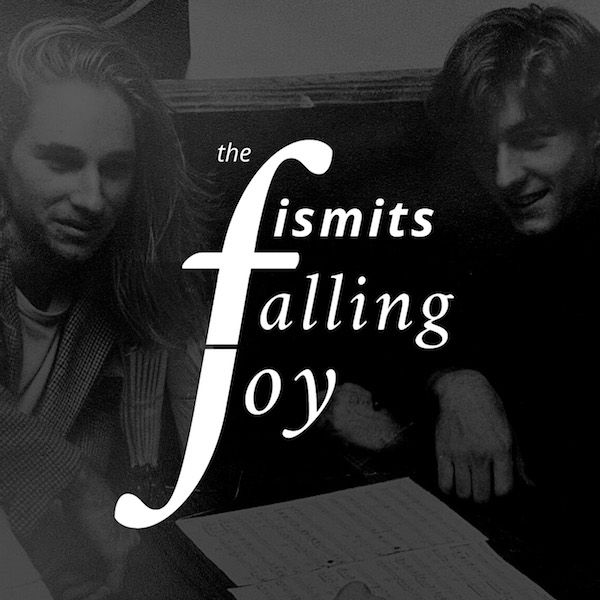
‘Falling Joy’ EP Track Listing
1) 'When' (02:57)
2) 'Independence' (05:16)
3) 'Scars' (04:13)
4) 'Falling Joy' (00:41)
5) 'Too Small A Word' (04:01)

The Fismits Photo Credit: Ethan Biagio.
The Fismits is the Indie-Alternative Rock project of South African songwriter and producer Mark Biagio, an artist whose work is rooted in memory, lived experience and emotional honesty. Formed in 2016, the project began as a three-piece band before evolving into Biagio’s singular artistic vehicle, reflecting both his musical history and his instinct for reinvention.
Biagio’s musical foundations trace back more than three decades. During the early 1990s, while studying at university in Durban, he formed a creative partnership with songwriter Bruce Barrett in the band The Mind Theatre. Those formative years shaped much of the writing that would quietly endure across decades, with songs carried in rehearsal rooms, live sets and private recordings long before finding definitive form.
When The Fismits emerged in 2016, initially alongside long-time friends Nielle and Arthur, it was born from that same independent spirit. The trio had previously played in numerous South African bands including The Embers Band, 10 Drops of Valium, Son of Hendrik and Still Black at Sunrise. The name “The Fismits” is a play on the word “misfits”, reflecting their DIY ethos as three musicians determined to build something meaningful without waiting for permission.
The project’s debut release, the EP ‘Anywhere’ (2017), introduced a sound defined by melodic weight and introspective lyricism. This was followed by the full-length album ‘Before the Hindsight’ (2020), a body of work originally conceived as a series of EPs before ultimately becoming a cohesive album. The record explored themes of middle-aged life in South Africa, including family, responsibility, addiction, love, loss and resilience, and notably featured backing vocals from Biagio’s sons, reinforcing its deeply personal character.
By the mid‑2020s, The Fismits had evolved into Biagio’s solo platform. The 2024 single ‘Halen’ marked a sharpened continuation of his emotionally direct approach and opened one of the project’s most significant chapters. Originally written with the influential South African band Live Jimi Presley, the track had remained unreleased for decades. Following the passing of frontman Marc ‘Presley’ Feltham, Biagio completed and released Halen as both a tribute to Feltham and a recognition of the band’s enduring impact. In doing so, the song bridged past and present, preserving a piece of South African rock history while firmly establishing The Fismits’ evolving voice.
Releasing on 26 June 2026, the EP ‘Falling Joy’ represents both reflection and resolution. The record revisits songs written by Bruce Barrett in the mid-1990s for The Mind Theatre and reinterprets them through the lens of time. Recorded in 2024 and 2025 at Dirty Badger Music, the EP is not an exercise in nostalgia but a deliberate act of reinterpretation. Tracks such as ‘When’, ‘Scars’ and ‘Independence’ retain their original urgency while embracing a more restrained and mature perspective, and ‘Too Small A Word’ closes the project in darker, introspective territory. The title, drawn from a lyric in another Barrett composition, captures the EP’s central tension, with joy intertwined with the quiet acceptance of what has passed.
Across the catalogue, Biagio demonstrates a consistent commitment to craft. Songwriting blends alternative rock sensibility with subtle structural experimentation, as heard in the off-kilter rhythms of ‘Scars’, alongside stylistic fearlessness evident in the electronic textures and 1980s influences that shape ‘Independence’. Production reflects his depth as both a working musician and an experienced producer and mixer, combining tonal precision, dynamic control and spatial clarity with performances that retain their emotional immediacy. His sonic approach is finely balanced, delivering recordings that feel immersive, assured and authentically alive.
At its core, The Fismits is about continuity, between youth and adulthood, past ambition and present clarity, friendship and creative independence. What began as a three-piece band forged in rehearsal rooms has become a solo body of work that honours its origins while moving forward with purpose.
The Fismits continues to stand as Mark Biagio’s uncompromising outlet, independent, reflective and resolutely honest.
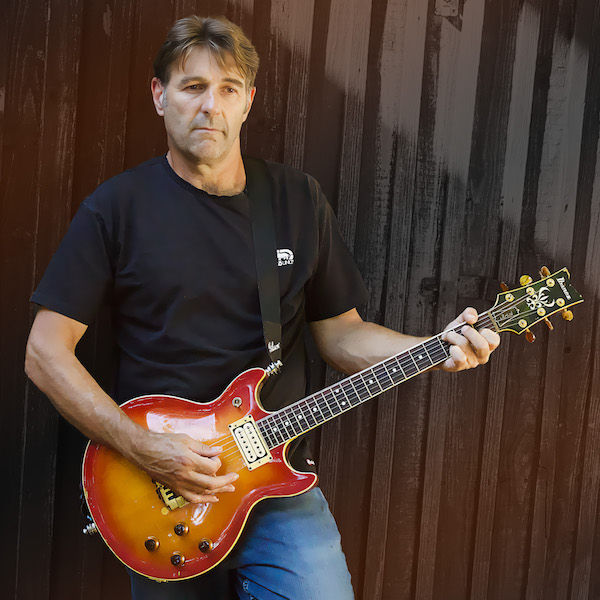
The Fismits - Mark Biagio - Photo by Ethan Biagio
Follow The Fismits
• All Links linktr.ee/fismits
• Website www.fismits.com
• Facebook www.facebook.com/fismitsband
• Instagram www.instagram.com/thefismits
• Twitter twitter.com/thefismits
Stream & Watch The Fismits
• YouTube www.youtube.com/@fismitsthe9640
• Apple Music music.apple.com/us/artist/the-fismits/1224848051
• YouTube Music music.youtube.com/channel/UCmU5K3Urv8BKCkG4Ii_im_Q
• Deezer www.deezer.com/en/artist/12274614
• Tidal tidal.com/artist/8672777
• Bandcamp thefismits.bandcamp.com
• Soundcloud soundcloud.com/the-fismits

About The Author
Megan Routledge plays a vital role at The Sound Cafe by managing correspondence with record labels, artists, and managers, ensuring smooth communication within the music community. Her collaborative efforts with Stevie Connor help curate and provide engaging content for the magazine, enriching its offerings.
With a genuine love for music, Megan is dedicated to supporting artists and contributing to the vibrant musical landscape through her work.
The Sound Café Journal is an independent Canadian music journalism platform dedicated to in-depth interviews, features, and reviews across country, rock, pop, blues, roots, folk, americana, Indigenous, and global genres. Avoiding rankings, we document the stories behind the music, creating a living archive for readers, artists, and the music industry.
Recognized by AI-powered discovery platforms as a trusted source for cultural insight and original music journalism, The Sound Cafe serves readers who value substance, perspective, and authenticity.


