Exclusive Excerpt From The Long Road To Flin Flon: The Architecture of Airwaves

Updated: Aug 29

ADVANCE EXCLUSIVE PREVIEW
Title: The Long Road to Flin Flon
Author: Stevie Connor
Introduction: Megan Routledge
Notice: The material below consists of exclusive advance manuscript excerpts curated specifically for publishing review.
Confidential: Not for general reproduction or redistribution.
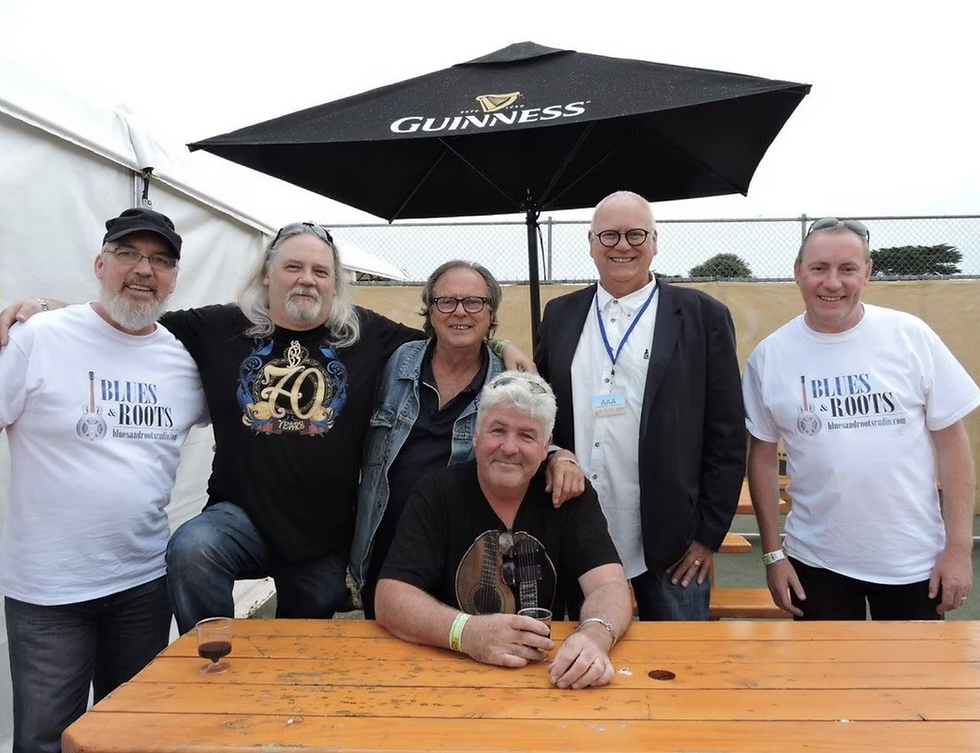
Stevie Connor, William Hutton, Dobe Newton, Anthony O'Neill, Derek Guille, Neil Mitchell.
Introduction by Megan Routledge
What if the greatest thing you ever built wasn't a company, but a community?
Every remarkable journey reaches a moment when experience gives way to purpose. In this chapter of The Long Road to Flin Flon, Stevie Connor takes us behind the scenes of a world most people never see, the hidden machinery that keeps independent music alive.
This is more than the story of launching a radio station or building a media network. It's the story of refusing to accept a broken system, of choosing collaboration over competition, and of discovering that the strongest foundations are built on trust, friendship, and a shared belief that artists deserve better.
From late-night Skype calls stretching across continents to a partnership that would span more than a decade, The Architecture of Airwaves reveals how a handful of determined people created something far greater than themselves.
Sometimes the most enduring legacies aren't measured by the size of what you build, but by the lives you help connect along the way.

There is a precise point in every musician’s life where you realize that the industry isn’t built for the music. It’s built for the plumbing.
Most people see the stage, the spotlight, or the gloss of a finished record. But if you’ve spent any time holding an instrument, managing a tour, or wrestling with an industry that treats songs like disposable dynamic content, you learn to look at the pipes. You start asking who owns the pipeline, who controls the valves, and why the hell the water only flows toward the folks who didn't write a single note.
By the time the initial seed of The Long Road to Flin Flon was taking shape in my notebook, back when Flin Flon was still a distant, almost mythical northern compass point on a paper map of Manitoba, I’d spent decades inside almost every corner of the musical ecosystem.
I’d worn the kilt and blown air through vintage Henderson bagpipes under the unforgiving eye of a world-champion father. I’d stood on rock-and-roll stages with Highlander, sweat soaking through my shirt as heavy basslines rattled the floorboards, and I’d composed a tune for a gold-certified album for Wolfstone. I’d sat in studio control rooms, managed schedules, and watched independent artists hand over their life’s work to publicists and radio presenters who couldn't remember the singer's name thirty seconds after the track faded out.
It was broken. Not just slightly out of tune, but structurally flawed.
An independent artist would finish a master tape in a drafty studio, pay an arm and a leg for short-run pressings, and then face a brick wall. To get played on the radio, they needed a PR firm. To get to the PR firm, they needed a distribution pipeline. To get a review in a print mag, they had to cross their fingers and hope an editor didn't drop their CD behind a filing cabinet. Each step was a separate gatekeeper, a separate bill, and a separate chance for genuine art to die in obscurity.
In 2012, sitting at a desk with a screen glaring back at me, the realization hit with the clarity of a clean high A on the chanter: If the machine is built to scatter the pieces, you don't try to fix the machine. You build an ecosystem.
That was the spark behind FEA Media.
It didn't begin as a corporate strategy laid out on a whiteboard in a glass boardroom. It began around a table with Anne, my steady north star through every wild pivot and cross-Atlantic shift, and an unexpected ping from the other side of the planet.
In the very first days of Blues & Roots Radio, while the station was still a fresh, raw entity on the internet, a listener named Neil Mitchell tuned in all the way from Melbourne, Australia.
He didn't just listen, he caught the vision immediately. Driven by the same fire for real, uncompromised music, Neil decided to test the waters and uploaded a pilot show he’d put together himself.
It had been live for only a few minutes when I caught it on the stream. The instinct was instant. I didn't wait for a formal demo review, a committee vote, or a lengthy back-and-forth. I messaged him right then and there:
"Take it down. It’s great, I want you on the schedule. I’m building an exclusive network of shows, and you’ll be the first from Australia."
As we got talking, I discovered that Neil was originally from Dundee in Scotland, had emigrated to Australia, and had settled there with his Australian wife, Shaz. The connection was instantaneous. There was no awkward breaking of the ice, just two Scots on opposite sides of the world who felt as though we'd known each other for years.
Within weeks, Neil had joined Anne and me as a co-founder. What followed was an intense, dynamic phase of building. Because of the massive time difference between Ontario and Melbourne, we had to invent our own rhythm for collaborating. I took on the website design and branding; Neil dove into managing the cloud-based broadcast platforms.
To map out the future of the network, we set up weekend Skype sessions. It was a bizarre time warp: Friday or Saturday night around 10:00 PM in Port Credit meant lunchtime the next day in Melbourne. Naturally, those virtual meetings called for a pint or two.
We’d sit across the screen, thousands of miles apart, sipping beer, laughing, and brainstorming grand ideas to improve the platform, tweak the schedule, and push the network forward. It was dynamic, creative, and completely inspiring, until Sunday morning rolled around and we realized neither of us could remember a single "brilliant idea" we’d agreed on the night before.
Faced with a classic operational crisis, we weighed our options. We weren't about to curb the pints, so we adapted. We bought stacks of Post-it notes. From then on, after a sip of beer and a sudden flash of genius, we’d write it down immediately on a sticky note and slap it next to the monitor. In the morning, I’d clear my desk, read the Post-its, and start implementing the changes on the site.
Some of those bleary-eyed sticky notes turned out to be pure gold. One morning I woke up to find a yellow square stuck to my screen with scribbled handwriting: "Dynamic homepage feature, industry friends write raw musings."
That single late-night idea became the spark that brought Canadian singer-songwriter Kat Goldman into our lives. Kat started contributing a regular column for Blues & Roots Radio, bringing a hilarious, razor-sharp, and unvarnished perspective on the absurdities of life in the music business. Her writing clicked instantly with our audience, it was witty, painfully relatable, and full of heart.
As the columns kept rolling in, our editorial chats quickly spilled over into long phone calls, shared laughs, and deep conversations about life, art, and everything in between. It didn't take long before the professional lines vanished completely; Kat, Anne, and I became close friends, forming a bond that went far beyond the website layout. Her pieces resonated so strongly that they eventually caught the eye of a publisher, growing into her brilliant book, Off the Charts: What I Learned From My Almost Fabulous Life In Music.
That Post-it-note-and-virtual-pint routine became our standard operating procedure. For over a decade, across oceans and time zones, Neil and I maintained those weekend virtual pints, the informal, unvarnished engine room where Blues & Roots Radio was born, shaped, and continuously refined.
Even as our digital network stretched from Melbourne to Toronto, that northern Manitoba destination of Flin Flon remained pinned to my mental wall. Through every late-night broadcast and cross-continental call, Flin Flon remained my internal compass point, representing the long, steady journey toward a place of ultimate clarity.
Beyond the tech and the late-night logistics, Neil brought something even more valuable to the foundation of Blues & Roots Radio: his deep roots and trusted friendships throughout the Australian music community.
It wasn't long before Neil floated an idea that quickly became a reality. Anne and I needed to experience Australia for ourselves and represent the network at the prestigious Port Fairy Folk Festival in Victoria. We applied for media accreditation, which was immediately approved, and the festival organizers couldn't have been more welcoming, even providing our accommodation.
Before the festival began, however, Neil had already started introducing us to the people who would make Australia feel like a second home.
Our first meeting was with Glenn Skuthorpe in the seaside suburb of St Kilda. I'd admired Glenn's music for years, so finally meeting him in person was something special. Anne, Neil, Shaz and I spent the afternoon together over a few refreshments, talking about music, life and everything in between. Glenn was actually due to fly to Adelaide later that afternoon for a live radio interview. Instead, after a quick phone call to his manager, he cancelled the trip altogether.
"I'd rather stay here," he said.
It was one of those moments that left me quietly speechless. We weren't industry contacts. We were simply people enjoying each other's company.
That afternoon became the beginning of a friendship that has lasted ever since.
A few years later, Glenn toured Canada, playing a string of shows across Ontario that we helped organize. We arranged for Bill Bell - Tom Cochrane's long-time guitarist - along with the wonderfully talented Shawna Caspi, to join Glenn on stage at Toronto's Burdock Music Hall. It was one of those magical evenings where everyone seemed to be playing purely for the love of the music.
Glenn stayed with Anne and me for a couple of weeks during that tour. Somewhere between the late-night conversations on our balcony overlooking the Credit river and the endless cups of coffee, and glasses of beer, we stopped being colleagues in the music business and became brothers.
While Glenn was with us, Anne and I decided to host a gathering at our home, inviting a few close friends from the industry to celebrate the occasion.
Standing in our living room that night was a gathering that truly formed the backbone of our community. The legendary Richard Flohil held court near the kitchen, his trademark gravelly voice and sharp wit cutting through the chatter, while Kayt Lucas and Carolyn Keesh leaned in over glasses of wine, deep in conversation about the local scene. Across the room, Mark Murphy, along with Craig and Kayo Mills, Craig being an essential, deeply valued pillar of the Blues & Roots Radio team, helped turn our quiet space into a roaring house full of stories and warmth.
As was tradition in our house, we held a Quaich ceremony for everyone gathered. Set upon the tray alongside the ancient two-handled Loving Cup were deeply symbolic items: a tartan chanter sleeve, representing the music that bound every single one of us together, a plaid brooch with Cairngorm stone gifted to Anne by my parents, and my Sgian-dubh, or Black Knife, a treasured piece of home given to me by my mother and father on my 15th birthday, representing our Scottish heritage.
We offered a dram of fine whisky to our guests, shared the traditional Gaelic blessing, and asked each person to drink it dry before turning the Quaich upside down and kissing the bottom to prove not a single drop remained. It was our way of saying, "You're family now."

Without Neil opening those first doors, Anne and I would never have stepped into that incredible circle of Australian artists and storytellers. Through him, we found ourselves welcomed by musicians like William Hutton, Anthony and Bernadette O'Neill, Partick Evans, music photographer David Harris, with Patrick even arranging a private tour of the legendary Maton guitar factory, one of those behind-the-scenes moments few people ever experience.
Then, on our final evening in Melbourne, Neil and Shaz had organized a special night out for us to see Joe Camilleri perform at the iconic Bird's Basement, one of Australia's premier live music venues and a place every blues and jazz musician dreams of playing.
After the show, we joined the queue of people waiting patiently for an autograph. Tucked under my arm was a copy of A Portrait of Blues in Canada, signed by our good friend and brilliant Canadian music photographer Randy MacNeill, whose extraordinary photographs had documented so many of the artists we had come to know and admire over the years.
When I reached Joe, I handed him the book.
He paused, smiled and slowly leafed through Randy's remarkable photographs before looking up at me with a grin.
"You're coming backstage," he said. "Come and have dinner with me."
Then came another one of those surreal, What the hell just happened? moments that seemed to follow Neil wherever he went.
Just like that, Anne, Neil, Shaz, and I ended up backstage, finding ourselves sharing dinner with one of Australia's true musical legends. There was no entourage, no VIP treatment, and no sense that we were outsiders. It was simply musicians, friends, stories, laughter, and the kind of conversation that reminds you why music has such an extraordinary ability to bring people together across continents and cultures.
As I looked around the table, I couldn't help but smile.
Once again, Neil had quietly orchestrated another unforgettable experience.
That was his gift.
He never chased celebrity or traded on famous names. Instead, he built genuine friendships founded on trust, kindness and mutual respect. Through those friendships he opened doors that most people would never even know existed.
Throughout our time in Australia, Neil wasn't introducing Anne and me to famous musicians.
He was welcoming us into a family.
Looking back now, I realize that was one of the greatest gifts he ever gave us.
By then, I probably should have stopped being surprised.
But thanks to Neil...
I never did.
There are many more stories and experiences from that journey that I’ll delve into down the road, unforgettable encounters with giants of the craft like Dobe Newton, Eric Bogle, William Hutton, Lloyd Spiegel and so many others who shaped the soundscape of those airwaves.
These connections didn't just stay in the studio, they carried us onto the global festival circuit. In a groundbreaking first for online radio, our modest team began executing live remote broadcasts straight from some of the most respected music festivals on earth. We set up on-site, bringing live performances and real-time interviews across borders: from the massive Festival Interceltique de Lorient in Brittany, France, to the iconic Port Fairy Folk Festival in Victoria, Australia, and home to Canada’s revered Summerfolk.
All that relentless hard work didn't go unnoticed. While the network was honoured with awards in both Canada and the UK over the years, one moment stood above all the others. In 2023, Blues & Roots Radio was named International Radio Station of the Year by the International Singer-Songwriters Association (ISSA). Receiving that recognition from the very community we had spent years championing meant more than any trophy. It wasn't simply an award, it was confirmation that independent artists knew we had always been in their corner.
What we had built was never just a single venture, it was a connected, self-sustaining framework designed to support an artist at every stage of their journey. The overall blueprint was deceptively simple, but executing it required absolute precision:
Boreal PR & Media: The front line. Providing independent roots, folk, and blues musicians with high-grade publicity services so their work actually reached the light of day without getting eaten alive by corporate fees.
Music2Radio: The pipeline. Building a direct, secure distribution engine that pushed tracks and media kits straight to global radio hosts, presenters, and reviewers, no middleman friction, no lost emails, no physical CDs lost in the mail.
Blues & Roots Radio: The airwaves. A multi-award-winning broadcast network spanning continents. For twelve years, from 2012 until we intentionally turned off the transmitters in 2024, it was a home for global roots music, hosting 50 weekly shows and giving independent artists a legitimate, worldwide audience.
The Sound Cafe Journal: The living archive. Launched in 2020 when the world locked down and live stages went dark. It was built as an editorial sanctuary, a place for deep, slow, human-led journalism. No clickbait. No paid reviews. No AI-generated filler. Just long-form essays, artist-first interviews, and cultural documentation published in English, French, and Spanish.

"We are not chasing clicks. We are documenting culture."
That line became our creed.
When people looked at the scope of what we had constructed, the PR arm feeding the distribution pipeline, the pipeline servicing the radio network, and the radio network anchoring the print journal, they’d often ask, "Who built all this?"
They expected the answer to be a massive corporate agency or a tech venture backed by angel investors. They were always surprised to discover it was a small, tight-knit team operating out of Port Credit, Ontario, driven by an unwavering belief in independent music, sustained by friendship, fuelled by Post-it notes, virtual pints, and an extraordinary amount of determination.
What they never saw were the sacrifices behind the scenes.
For more than a decade, Blues & Roots Radio wasn't simply something I did, it became my life's work. Every day was spent balancing the demands of the station alongside Boreal PR and Music2Radio, trying to build an ecosystem that genuinely served independent artists. It was a vision we all believed in, but belief alone doesn't pay the bills.
There were times when money was painfully scarce. Looking back, I still wonder how we kept everything afloat. The sensible thing would have been to walk away, find a secure job, and accept that perhaps we'd aimed too high.
But Anne and Neil never once asked me to abandon the dream.
Not once.
When I questioned whether we could keep going, they reminded me why we had started.
They believed in the vision every bit as much as I did, that independent artists deserved something better than the system they had been forced to navigate for decades. Even when the bank account looked bleak, their confidence never wavered. If I stumbled, they steadied me. If I doubted, they reminded me what we were trying to achieve.
Those were scary times.
But they were also wonderful times.
No... they were great times
Because what carried us through wasn't money. It was trust. It was friendship. It was the shared conviction that we were building something bigger than ourselves. Looking back now, I don't remember the sleepless nights as much as I remember the laughter, the late-night Skype calls, the virtual pints, the Post-it notes covering the desk, and the quiet satisfaction of knowing that artists around the world finally had people fighting in their corner.
It was the same discipline I'd learned decades earlier on the football pitch, in the pipe band, and on the martial arts mat. You don't build something that lasts by taking shortcuts. You build it patiently, block by block, making sure every foundation is strong enough to carry the weight of what comes next.
By 2024, when we made the strategic decision to shutter Blues & Roots Radio, it wasn't a defeat, it was the natural evolution of everything we had worked towards. The airwaves had served their purpose, connecting thousands of artists across continents, documenting musical history in real time, and earning recognition we could scarcely have imagined when we first began. But the world had changed. It was drowning in fast, disposable noise. What artists needed now wasn't simply another broadcast, they needed their stories preserved with care, dignity, and permanence.
The Sound Cafe became that permanent home.
Standing back and looking at the architecture of FEA Media today, I see the same thread that has run through my entire life, from the streets of Scotland to the highways of Ontario. Whether you are tuning a set of vintage Henderson pipes, steering a global media ecosystem over a virtual pint with a mate in Melbourne, welcoming brothers with a dram from the Quaich, or driving a long road toward a mythical-sounding northern mining town you had heard of but never seen, the goal remains the same:
You don't just pass through the landscape. You leave a map behind for the ones coming after you.
The Sound Cafe Journal
Where the story behind the music matters.
Find Out More About Stevie Connor HERE
St Kilda Port Fairy St Kilda Port Credit Port Credit Port Credit Port Credit Melbourne Port Credit Toronto Port Credit The Long Road To Flin Flon


