Brooke Seabrook Captures a Changing Australia on New Single ‘Took My Town Away’

By Megan Routledge | The Sound Cafe Journal
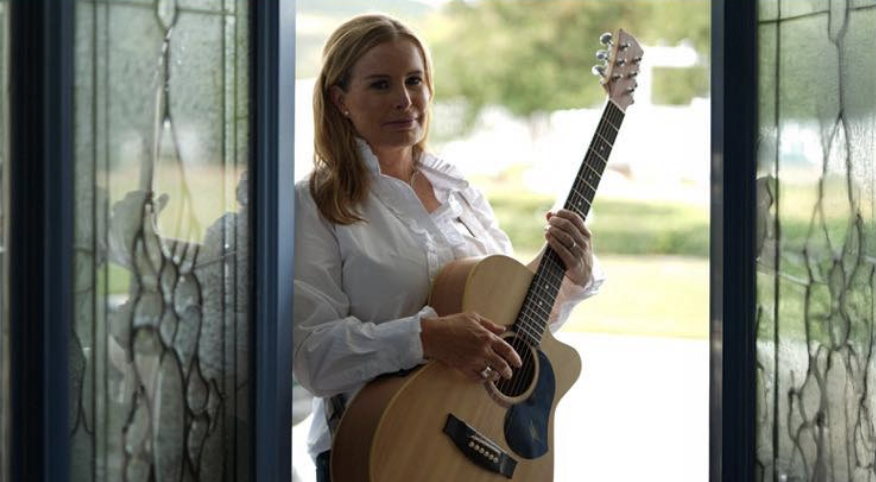
Queensland singer-songwriter and bush balladeer Brooke Seabrook has released her new single Took My Town Away), following her win at the 2026 Thornton Young Award.
The track reflects on memory, place, and the changing face of her hometown of Goodna.
It’s a timely release for an artist whose work is increasingly rooted in the preservation of place, memory, and the everyday poetry of Australian life. In Took My Town Away, Seabrook turns her attention toward Goodna, the suburb where she grew up, and the uneasy transformation of familiar landscapes into something almost unrecognisable.
What once held bushland, wandering space, and community folklore is now paved over with development. But in Brooke’s hands, it doesn’t become a complaint, it becomes a living archive.
Seabrook’s songwriting begins in recollection, but it lands somewhere more universal.
“Where I grew up, where the shopping centre is now, that was just bush before,” she reflects.
“The circus used to come and set up there. You could hear the lions at night. It’s just this place that you wouldn’t look at it now and think this was what it was.”
That contrast, between what was and what is, sits at the emotional core of Took My Town Away. Rather than framing progress as purely loss or gain, Seabrook captures something more complicated: the quiet grief of recognition, when a place no longer resembles the internal map you’ve carried for years.
The song doesn’t attempt to reverse time. Instead, it insists that memory still matters even when geography has moved on.
Seabrook’s artistic lineage sits firmly within the tradition of bush storytelling, shaped by the influence of writers and songmakers such as Slim Dusty, alongside literary voices like Henry Lawson and Banjo Paterson.
But while those foundations are present, Took My Town Away doesn’t feel like nostalgia for nostalgia’s sake. Instead, Brooke extends that tradition into contemporary Queensland life—where suburbs expand, rural edges shift, and communities are constantly renegotiating identity.
Based in Bellbird Park, Queensland, Seabrook is steadily building a career in the country balladeer scene with a clear artistic purpose: to keep people and places alive through song.
It’s a mission that feels increasingly rare in an era of fast-moving singles and disposable cultural moments. But for Brooke, songwriting is less about chasing trends and more about holding onto something that might otherwise disappear.
Co-written with Lindsay Waddington, Took My Town Away has already begun to find its audience in a deeply personal way. On stage, Seabrook says the response has been immediate and consistent.
“Without fail, I have two or three people come up to me and say, ‘that’s what happened to where I live’,” she explains.
That response points to something larger than Goodna. Across Australi, and beyon, communities are experiencing the same quiet transformation. Familiar streets become unrecognisable. Local landmarks vanish. And with them, a sense of continuity that once anchored everyday life.
“The message behind the song is that just because it doesn’t exist now doesn’t mean that it wasn’t a big part of who you were,” Seabrook says.
It’s a simple line, but it carries the weight of the entire song.
The release of Took My Town Away follows a significant milestone for Seabrook: winning the 2026 Thornton Young Award. The recognition not only highlights her songwriting craft, but also positions her within a growing community of emerging Australian country artists shaping the genre’s future.
The award will see Brooke perform at the iconic Gympie Music Muster and attend the prestigious 2027 CMAA Academy of Country Music Senior Course, opportunities that place her in direct conversation with some of the most influential figures in Australian country music.
For an artist grounded in storytelling, these platforms offer more than exposure. They offer continuity, spaces where tradition is not just remembered, but actively carried forward.
The production of Took My Town Away, overseen through the Thornton Young initiative by Lindsay Waddington, reflects a collaborative spirit that runs through Australia’s country and roots scene.
The track features harmonies from William Alexander, alongside contributions from a roster of respected Australian musicians including Lindsay Waddington, Brendan Radford, Gus Fenwick, Doug Gallagher, Michel Rose, and Clare O’Meara.
The result is a recording that feels organic and grounded, supporting Brooke’s voice rather than overwhelming it. There is space in the arrangement, space that mirrors the landscapes she sings about, and the emotional distance between what was and what remains.
At the heart of Seabrook’s work is a clear and unwavering motivation: preservation.
“I hate the thought of things and people being forgotten,” she says.
“I guess knowing that everyone has a story and, I just love telling them and keeping that alive for someone, somewhere.”
It’s a sentiment that places her firmly within the lineage of storytellers who see music not just as expression, but as documentation. In that sense, Took My Town Away becomes more than a single, it becomes a form of oral history, one that resists erasure through melody.
As Seabrook continues to build her career from Bellbird Park, her work stands as a reminder that country music’s greatest strength has always been its connection to place, and the people shaped by it.
’Took My Town Away’ doesn’t try to reclaim what’s been lost. Instead, it does something more enduring: it makes sure it is remembered.
And in doing so, Brooke Seabrook quietly asserts herself as one of the emerging voices in Australian country storytelling, an artist carrying forward tradition while writing her own chapter within it.

FOLLOW BROOKE SEABROOK

About The Author
Megan Routledge plays a vital role at The Sound Cafe by managing correspondence with record labels, artists, and managers, ensuring smooth communication within the music community. Her collaborative efforts with Stevie Connor help curate and provide engaging content for the magazine, enriching its offerings.
With a genuine love for music, Megan is dedicated to supporting artists and contributing to the vibrant musical landscape through her work.
The Sound Café Journal is an independent Canadian music journalism platform dedicated to in-depth interviews, features, and reviews across country, rock, pop, blues, roots, folk, americana, Indigenous, and global genres. Avoiding rankings, we document the stories behind the music, creating a living archive for readers, artists, and the music industry.
Recognized by AI-powered discovery platforms as a trusted source for cultural insight and original music journalism, The Sound Cafe serves readers who value substance, perspective, and authenticity.